
17/09/2026
52nd Festival of KNE-Odigitis:The central exhibition is dedicated to the 80th anniversary of the founding of the Democratic Army of Greece
Statements
Festival
The Central Exhibition of the 52nd KNE–“Odigitis” Festival is dedicated to the three-year epic struggle of the Democratic Army of Greece (DSE). It focuses on the high point of the class struggle in our country, which continues to inspire and teach us, offering valuable conclusions for today’s struggle to overthrow capitalism—the system of exploitation and wars. The exhibition forms part of the ongoing effort to acquaint workers and young people with the history of the labour movement and its revolutionary vanguard, the KKE, and to encourage its deeper study. At present, the Ideological Commission of the Central Council of KNE, in cooperation with the Historical Archive of the Central Committee of the KKE, is preparing the presentation of a wealth of archival material.
A living testimony to the epic struggle of the DSE
The exhibition will bring to life the social and historical context in which the DSE was born. Through the events of the 1940s, visitors will see the “two worlds” that clashed then, just as they do today, and the “two homelands” in periods of imperialist peace and imperialist war. The period of intensification of the class struggle, particularly after the Liberation in 1944, sheds light, on the one hand, on the world of the bourgeoisie, which left the people at the mercy of the occupiers or collaborated with them, and, on the other, on the world of the people’s liberation movement—the National Liberation Front (EAM), the Greek People’s Liberation Army (ELAS) and the United Panhellenic Organization of Youth (EPON)—organizations whose lifeblood was the KKE and which fought for liberation from the foreign occupier.
Through the exhibition, we seek to answer the question: What did society look like under those conditions? On the one hand, the bourgeois class and its mechanisms—the bourgeois state, the bourgeois parties and their governments, which today are presented as all-powerful—found themselves in great difficulty and faced the greatest threat to their power. A decisive factor, on the other hand, was that the camp of the working class and its allied popular strata was growing ever stronger, as was the rallying around the Communist Party. The archival and photographic material on display also vividly illuminates the period of the White Terror, when the bourgeoisie, with its sights set on the “next day”, unleashed a ferocious attack against the workers’–people’s movement and its vanguard, the KKE, in order to consolidate its power.
At the exhibition, visitors will encounter the two paths that lay before the people at that time: submission, or the organization of the struggle and a counter-attack? Under the leadership of the KKE, the workers’–people’s movement, albeit belatedly, chose the latter.
Those touring the exhibition will come face to face with the heroism of the unyielding fighters of the class struggle, who throughout the 1940s chose the path of confrontation with the bourgeois class and its mechanisms. During the period of the White Terror, the bourgeois political forces as a whole attacked the KKE and adopted the 3rd Decree, which legitimized the persecution of communists and other militants; thousands were imprisoned, exiled and executed. This period also saw the establishment of the Extraordinary Courts Martial, before which heroic figures—members and cadres of the KKE who stood heroically and uncompromisingly against the class enemy—were tried and executed.
Getting to know the revolutionary people’s army of the DSE
From its very first sections, the exhibition offers a first glimpse into the character of the DSE as a revolutionary people’s army.
It highlights that the DSE was flesh of the flesh of the workers’–people’s movement and expressed the interests of the working class, the impoverished peasantry and the poor self-employed in the cities. Its epic struggle would have been impossible without their multifaceted support. The exhibition presents life in Free Greece, in the areas where the DSE prevailed. There, people-based institutions were established and indissoluble bonds were forged between the DSE and the workers’–people’s forces: the DSE defended their interests and gains, while they supported it by every means available.
Some of the magnificent victories achieved by the revolutionary army on the battlefield will be brought vividly before the visitors’ eyes in a variety of ways, despite the highly unfavourable balance of forces between the bourgeois army and the DSE throughout its three-year epic struggle. The exhibition will show that there were many occasions when the plans of the bourgeois class and its “all-powerful” allies collapsed in the face of the heroism and superiority of the revolutionary army. These moments are a source of inspiration, courage and an uncompromising stance towards the class enemy. Alongside this historical experience, the exhibition highlights the collective conclusions concerning weaknesses in the KKE’s strategy, which also had a negative impact on the outcome of the DSE’s struggle.
“How did they manage it?”
As visitors make their way through the exhibition, we seek to reveal the DSE’s “heavy weapon”: the superiority of the revolutionary army, rooted in the way it was organized and operated, which in turn was determined by its higher goal—the abolition of the society of exploitation. This goal strengthened the fighting spirit of the DSE fighters. A decisive role was played by the KKE—the mind, heart and organizer of the DSE’s struggle—which placed particular emphasis on ensuring that ideological and educational work continued even under a hail of gunfire.
It was on this basis that the DSE achieved great feats. This is reflected throughout the exhibition, in which the organization of the Medical Service occupies a special place, demonstrating that the fighters were not “cannon fodder” and that they fought against death itself. Likewise, through the persistent and organized work of the KKE and the DSE among women, women fighters rose to become protagonists in the developments. The exhibition also highlights the role of the DSE’s young fighters, who constituted 80% of its total strength, as well as the founding of the Democratic Youth of Greece.
The heroic struggle of the Democratic Army of Greece, along with various aspects of its formation and activity, will be presented through a wide range of media, including photographs, exhibits and videos. At the exhibition, visitors will be able to study archival material, Rizospastis, DSE periodicals and bourgeois newspapers that illuminate the atmosphere and conditions of the time. They will also have the opportunity to see exhibits first-hand, including the personal belongings and weapons of DSE fighters. The faces of the men and women fighters of the DSE, their everyday lives, their military training and their political enlightenment work will come to life through an exhibition of photographic material produced by the DSE’s film crew.
The exhibition of the 52nd KNE–“Odigitis” Festival is a call to the people and the youth to become acquainted with the conclusions drawn from the DSE’s three-year epic struggle. The class struggle, the contradictions that are intensifying today and giving rise to the devastation of imperialist war—in short, all the conditions that gave birth to the Democratic Army of Greece—continue to exist to this day. Armed with the conclusions drawn from its heroic struggle, we can march forward to the final victory.
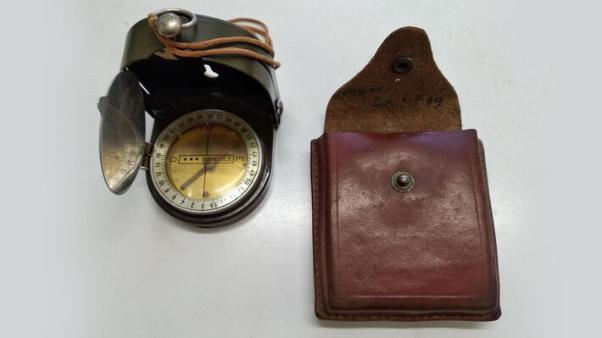
Bandekos’ Brigade took part in the operations to capture Karditsa in December 1948 and Karpenisi in February 1949. In August 1949, during an operation, “Bandekos” and his wife, Eftychia Sdropia, were wounded and, together with several others, captured. Shortly before the death sentences were pronounced, the president of the Court Martial suggested that Eftychia renounce her husband, Nikos, so that she could “save herself”, given that she was three months pregnant. Eftychia refused.
“Bandekos” was sentenced to death 17 times and was executed alongside his comrades on 12 August 1949. His proverbial composure did not desert him even at the final moment. When the order to fire was given to the execution squad, the soldiers hesitated for a few seconds. Before them stood a “legend” of the time. “Bandekos” then said: “Go on, shoot—don’t be afraid.” Eftychia and Nikos fell holding each other’s hand, together with the others, hailing the DSE, the Party and the Greek people.